News summaryOnePlus News
What Happened To OnePlus? How The 'Flagship Killer' Lost Its Identity
What Happened To OnePlus? How The 'Flagship Killer' Lost Its Identity bgr.com
Pexels (free commercial use)
By [Asad Kashif](/author/asadkashif/)
Aug. 26, 2026 2:47 pm EST
NYC Russ/Shutterstock
The U.S. smartphone industry is one of the hardest to break into. Apple and Samsung have dominated the space for the longest time, and any brand that does make it in has to compete for the scraps they leave. It seemed completely unprecedented for a Chinese startup focusing on enthusiasts to ever have a chance, yet OnePlus took the U.S. market by storm with the OnePlus One in 2014, cementing itself as a competitive force here to stay.
Fast forward to today, and little is left of what OnePlus originally was. Instead of focusing solely on phones that give flagship-level performance at mid-range prices, OnePlus now produces high-end devices priced similarly to Apple and Samsung flagships, with the OnePlus 15 starting at $900. The company is also taking its business out of America and focusing on countries in Asia, even though its early popularity in the U.S. was one of the biggest parts of its success.
Perhaps the most notable change has to do with who owned the OnePlus brand. While it presented itself as an independent startup, OnePlus always had Oppo backing it up, as well as BBK Electronics, the parent company behind Oppo. Facing scrutiny in the global market for being a major Chinese conglomerate behind multiple widely successful smartphone brands, BBK Electronics deregistered in 2023, and OnePlus got absorbed into Oppo as a sub-brand. Since then, OnePlus phones have become exceedingly similar to Oppo's offerings.
OnePlus' initial business model wasn't sustainable
Phil Ashley/Getty Images
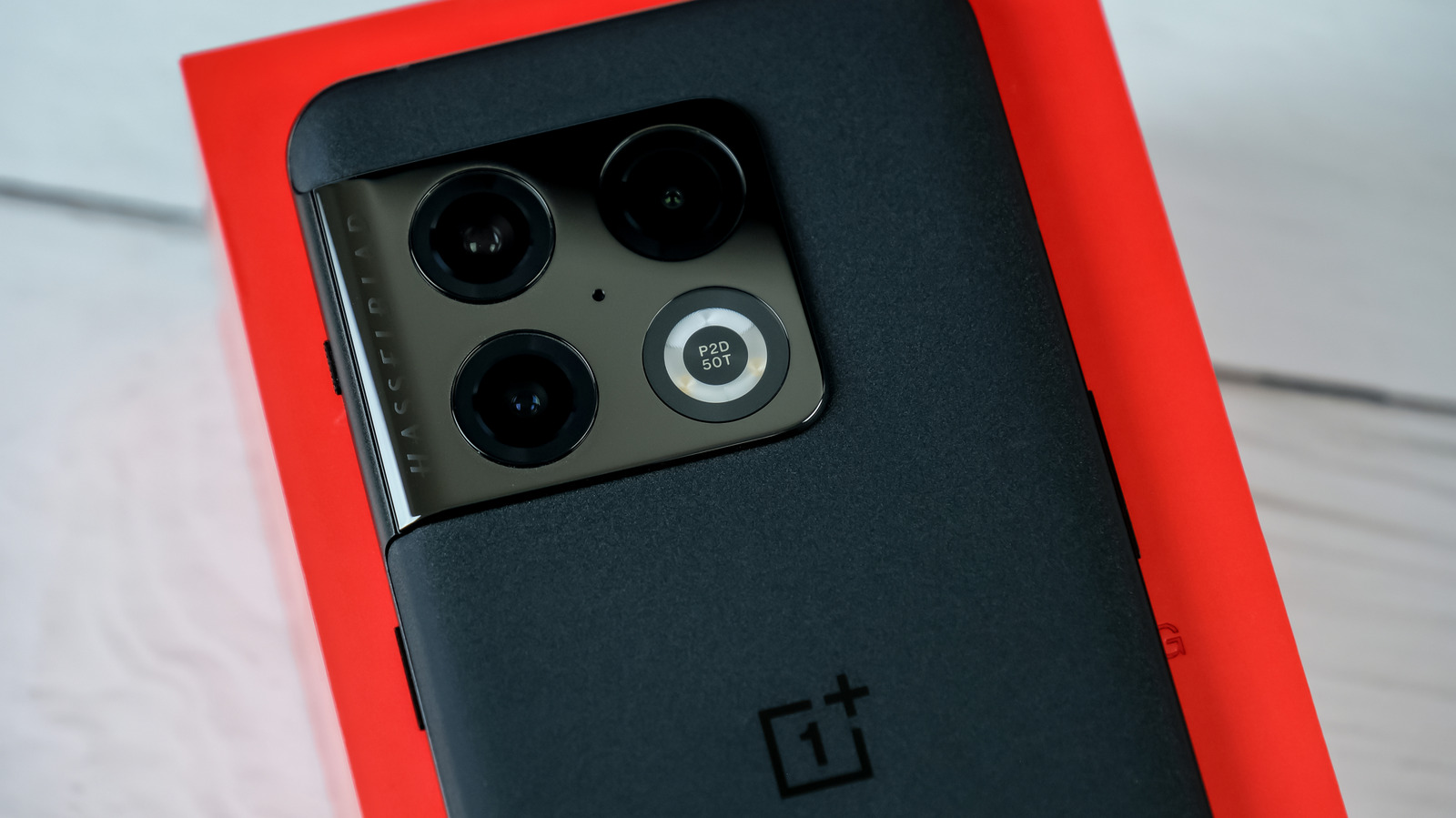
OnePlus started out as a budget-friendly brand targeted at enthusiasts who valued innovation and pure specs instead of brand appeal. As such, the OnePlus One used hardware that other similarly priced phones simply weren't willing to go for. It offered more RAM than Samsung and Apple flagships: 3GB compared to the Galaxy S5's 2GB and the iPhone 6's 1GB. Additionally, the phone came equipped with the same Snapdragon 801 as the Samsung Galaxy S5, even though the S5 cost $649, more than double the OnePlus One's $299. OnePlus also offered an incredibly good deal on storage upgrades for its first phone. You could get the 64GB version for $349, a $50 increase over the 16GB variant. For comparison, the 16GB iPhone 6 was $649, and upgrading to 64GB meant paying $749, a $100 increase for the same amount of storage.
This meant that OnePlus was buying more expensive hardware and selling its devices on thinner profit margins. This worked initially and had everyone talking about the brand. However, the business model wasn't scalable: enthusiasts and average buyers look for very different things in a new phone, and tech enthusiasts are a niche demographic to begin with. It's much more profitable to appeal to a larger audience. OnePlus had already succeeded in putting its name in the market, and its razor-thin profit margins couldn't sustain its expansion. As such, while the company still produces budget phones like the OnePlus 15R, its focus has pivoted toward premium flagships and mainstream marketing.
How Nothing became OnePlus' spiritual successor
Right around the time when OnePlus was transitioning to mainstream devices, co-founder Carl Pei left the company in 2020 to launch Nothing. Pei was one of the leading forces that took OnePlus outside of China and cemented it as a notable brand in the Western market. Unsurprisingly, Nothing is following the same ideology that elevated OnePlus to its status back in 2014: appealing to early adopters and enthusiasts who value something new. However, Nothing takes a different approach from OnePlus. It doesn't try to pack as much powerful hardware as possible into its phones by cutting marketing costs and relying on the sheer volume of sales and adoption to make up for its painfully low profit margins.
Instead, most of its appeal comes from its innovative design, no-bloat UI, and additional aesthetic and quality-of-life features — all much cheaper to implement than stuffing more powerful hardware in. This leads to higher profit margins and more budget to be allocated for marketing. This might make Nothing the first enthusiast-focused smartphone brand to survive without abandoning its identity, though it's still too early to be certain.
Related stories
Official announcement
Samsung Galaxy S26 FE: Delivering the Latest Flagship Experience, Focused on What Matters Most
Samsung Newsroom
Samsung Electronics today announced Galaxy S26 FE, the newest addition to the Galaxy S26 family and the first in the lineup to launch with One UI 9 — bringing the latest premium Galaxy experiences to more users from day one. With enhanced camera capabilities and more context-awar

Official announcement
Giga-Scale AI and the Ethernet Evolution: How Spectrum-X Ethernet Rewrites the Rules
NVIDIA Developer Blog
The massive growth of generative AI has fundamentally altered data center design. As distributed model training scales to span hundreds of thousands of GPUs,... The massive growth of generative AI has fundamentally altered data center design. As distributed model training scales

Official announcement
How AI Coding Agents Can Unlock Materials Simulation with NVIDIA ALCHEMI Toolkit
NVIDIA Developer Blog
Atomistic simulation requires three things: knowledge of the science, compute-efficient implementation of simulations, and accessible interfaces to the... Atomistic simulation requires three things: knowledge of the science, compute-efficient implementation of simulations, and ac
Official announcement
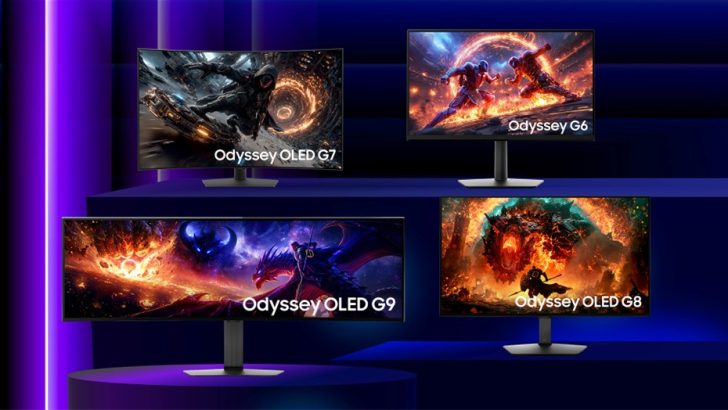
Samsung Introduces New Odyssey Lineup for Fast-Paced Gaming at Gamescom 2026
Samsung Newsroom
Samsung Electronics today announced its 2027 Odyssey gaming monitor lineup at Gamescom 2026, the world’s largest gaming event, being held in Cologne, Germany from Aug. 26-30. The new lineup introduces multiple Odyssey models that feature world-first innovations, empowering player

Official announcement
How we saved 100 terabytes of memory by optimizing 1.1.1.1’s DNS cache
Sebastiaan Neuteboom
Big Pineapple , the platform behind 1.1.1.1 , Gateway DNS , DNS Firewall , AS112 , and several other Cloudflare DNS services, stores over 250 billion DNS cache entries at any given time. At that scale, wasting a single byte per entry costs more than 250 gigabytes of memory across

Official announcement
OpenClaw went viral. Meet the maintainers building and securing it.
Gregg Cochran
What began as a personal experiment quickly became a global open source project with extraordinary momentum. OpenClaw is a personal AI assistant that runs on users’ devices and connects with the messaging channels they already use. Started by Peter Steinberger as a weekend projec