
The massive growth of generative AI has fundamentally altered data center design. As distributed model training scales to span hundreds of thousands of GPUs, the scale-out network connecting these nodes has emerged as a first-order performance bottleneck.
Official announcementNVIDIA Developer Blog
Giga-Scale AI and the Ethernet Evolution: How Spectrum-X Ethernet Rewrites the Rules
The massive growth of generative AI has fundamentally altered data center design. As distributed model training scales to span hundreds of thousands of GPUs,... The massive growth of generative AI has fundamentally altered data center design. As distributed model training scales

For decades, traditional off-the-shelf Ethernet has been the undisputed king of enterprise and cloud networking. It is cheap, standardized, and highly effective at handling general-purpose, high-entropy web traffic. However, when traditional Ethernet is forced to handle the massive, highly synchronized communication patterns required by AI architectures, it hits a physical wall.
To bridge this gap, NVIDIA introduced Spectrum-X Ethernet, a hardware-accelerated networking architecture designed from the ground up for giga-scale AI factories. Unlike traditional Ethernet, which relies on decades-old routing and congestion control paradigms, Spectrum-X Ethernet co-designs high-performance switches and host-side network interface cards (NICs) to deliver predictable low latency, high fabric utilization, and robust resilience under extreme load and stress.
This post explores the structural limitations that make traditional Ethernet ill-suited for AI workloads, deconstructs the unique architectural principles of Spectrum-X Ethernet, and explains how Spectrum-X Multiplane technology maximizes bisection bandwidth and accelerates Time-to-AI.
The collision course: Why traditional Ethernet fails AI workloads[](#the_collision_course_why_traditional_ethernet_fails_ai_workloads)
Standard data center traffic is high entropy; millions of small, independent flows travel in different directions. Equal-Cost Multi-Path (ECMP) routing uses static flow hashing to spread them across parallel paths, generally producing balanced utilization.
AI training traffic is low entropy. GPUs continuously synchronize through collectives such as All-Reduce, All-Gather, and All-to-All, creating relatively few, very large, synchronized flows. This exposes three limitations of traditional Ethernet:
- Hash collisions and stragglers: ECMP doesn’t account for real-time congestion, so large flows may collide on one link while others are underused. Because synchronous collectives finish only when their slowest flow completes, one congested path can delay the collective and leave many GPUs idle.
- Lossy versus lossless operation: Congestion can overflow switch buffers and trigger packet loss and retransmission, delays that significantly hurt AI performance. RoCEv2 deployments often use Priority Flow Control (PFC) to reduce loss, but pause frames can propagate congestion, create head-of-line blocking, and potentially stall the fabric.
- Slow congestion control: Protocols such as Data Center Quantized Congestion Notification (DCQCN) can be difficult to tune for synchronized AI bursts. Delayed or excessive reactions can cause buffer buildup, underutilization, and latency spikes.
- Near-Perfect Multi-Tenant Isolation: With traditional Ethernet, “noisy neighbor” traffic from one job can bleed into another, causing an All-to-All collective’s bandwidth to collapse by more than 80%. This isolation failure was demonstrated in a DeepSeek-V3 LLM training simulation. When running standalone, standard Ethernet achieved a training step time of 735 ms. However, when background “noise” traffic was introduced, standard Ethernet’s step times inflated to 1.18 seconds (a 1.6x slowdown). Spectrum-X Ethernet, by isolating congestion per plane and dynamically routing around hotspots, maintained a stable training step time of 668 ms under both standalone and heavily congested multi-tenant conditions representing virtually zero degradation.
Figure 1. DeepSeek-V3 training step time isolation under RDMA noise traffic
Related stories

Official announcement
How AI Coding Agents Can Unlock Materials Simulation with NVIDIA ALCHEMI Toolkit
NVIDIA Developer Blog
Atomistic simulation requires three things: knowledge of the science, compute-efficient implementation of simulations, and accessible interfaces to the... Atomistic simulation requires three things: knowledge of the science, compute-efficient implementation of simulations, and ac

Official announcement
How we saved 100 terabytes of memory by optimizing 1.1.1.1’s DNS cache
Sebastiaan Neuteboom
Big Pineapple , the platform behind 1.1.1.1 , Gateway DNS , DNS Firewall , AS112 , and several other Cloudflare DNS services, stores over 250 billion DNS cache entries at any given time. At that scale, wasting a single byte per entry costs more than 250 gigabytes of memory across
Official announcement
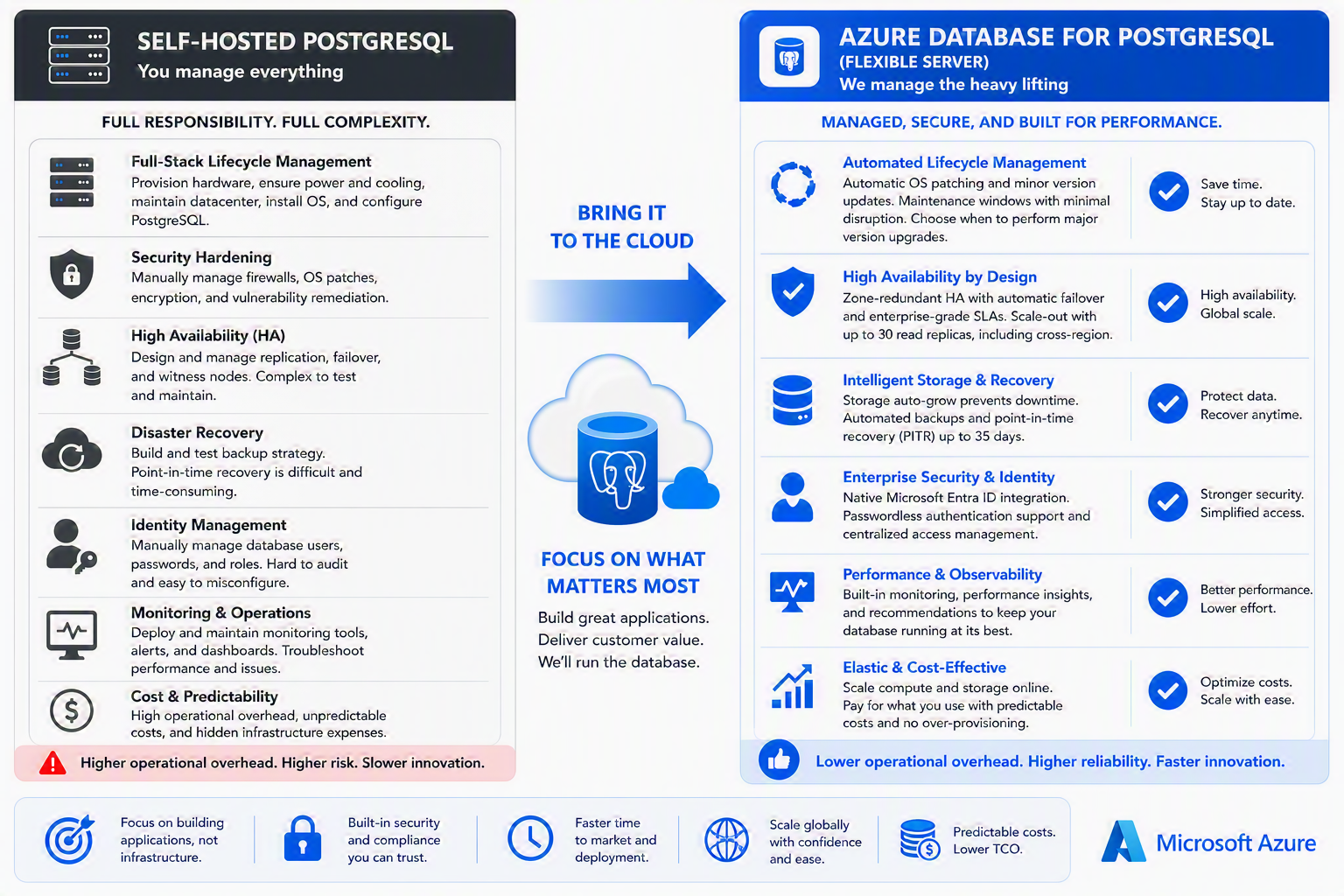
Managed PostgreSQL vs. self-hosted PostgreSQL: Key benefits and trade-offs
Lauro Ojeda
Summary This post is for technical decision makers evaluating where to run production PostgreSQL workloads. It compares two valid operating models—self-managed PostgreSQL and a managed database service—through business and operational outcomes: control, engineering capacity, resi

Official announcement
OpenClaw went viral. Meet the maintainers building and securing it.
Gregg Cochran
What began as a personal experiment quickly became a global open source project with extraordinary momentum. OpenClaw is a personal AI assistant that runs on users’ devices and connects with the messaging channels they already use. Started by Peter Steinberger as a weekend projec

Official announcement
IBM Brings AI-Powered US Open Fan Experience Back to Madison Square Park
IBM Newsroom
Join IBM for AI-powered tennis activations, live US Open match viewing, giveaways and more during Championship Weekend
Official announcement
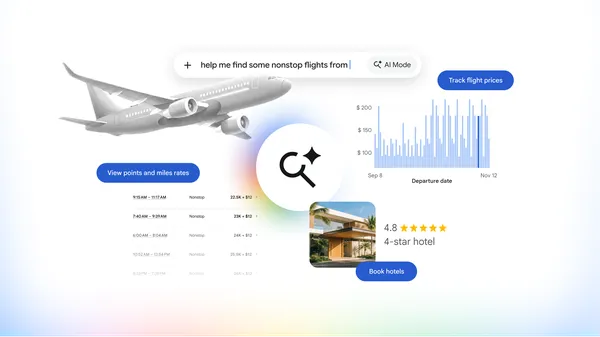
3 new ways to plan and book travel in Search
Google AI Blog
Book hotels and track airfares, plus view miles and rewards with AI Mode in Google Search.