Deploying an AI coding assistant in a regulated, sovereign, or source-sensitive environment, often comes with challenges. Three common issues are: the source cannot leave the network, the assistant occasionally invents package names that introduce supply-chain risk, and there is no audit trail when a generated change ships a defect.
Official announcementNVIDIA Developer Blog
How to Self-Host a Validated AI Coding Assistant with NVIDIA NeMo Guardrails
פריסת עוזר קידוד בינה מלאכותית בסביבה מוסדרת, ריבונית או רגישה למקור, כרוכה לעתים קרובות באתגרים. שלוש בעיות נפוצות הן: המקור... פריסת עוזר קידוד בינה מלאכותית בסביבה מוסדרת, ריבונית או רגישה למקור, מלווה לעתים קרובות באתגר

This tutorial walks you through how to self-host a validated coding assistant on NVIDIA infrastructure that solves all three of these issues. By the end, you’ll have a StarCoder2-7B NIM endpoint serving code completions from your own GPUs, an NVIDIA NeMo Guardrails policy in front of it that refuses requests for files you mark as human-only, a CI verification stage that catches hallucinated packages before review, commit-level traceability, and a minimal metrics loop that tells you whether AI-assisted patches are improving or hurting your defect rate.
Tutorial prerequisites and notes[](#tutorial_prerequisites_and_notes)
To follow along with the tutorial, you’ll need:
- An NGC API key
- A supported NVIDIA GPU with at least 24 GB of memory (for example, NVIDIA A10, L4, L40S, or A100)
- Docker with the NVIDIA Container Toolkit
- Python 3.10+
- A Git repo you can experiment against
StarCoder2-7B runs in BF16. NVIDIA H100 and H200 GPUs provide the certified, highest-throughput profile but are not required for a pilot. Every artifact in this tutorial is shown inline and is small enough to copy directly into your project.
The architecture of the validated coding assistant includes three layers (Figure 1). At the top, the developer IDE sends requests to a NeMo Guardrails proxy that fronts the StarCoder2 NIM, which serves completions from your own GPUs. Commits then flow through a CI verification gate to a reviewer and merge. Merged pull requests feed a Prometheus and Grafana metrics loop, whose escape-rate signal loops back to tighten the NeMo Guardrails policy.
The components are intentionally small. Each step is independently useful, so a team can adopt the system incrementally instead of treating self-hosted AI assistance as a single large migration.
The important design choice is that the model is not the control plane. The model proposes code, but policy enforcement, dependency verification, source traceability, and outcome measurement live outside the model in systems that engineering teams already trust. This approach maintains an understandable deployment. If a suggestion is blocked, you can inspect the NeMo Guardrails policy. If a package is rejected, you can inspect the dependency scan output. If AI-assisted changes regress, you can inspect the same production metrics you use for human-authored changes.
Figure 1. End-to-end architecture of the validated coding assistant
Related stories

Official announcement
Giga-Scale AI and the Ethernet Evolution: How Spectrum-X Ethernet Rewrites the Rules
NVIDIA Developer Blog
The massive growth of generative AI has fundamentally altered data center design. As distributed model training scales to span hundreds of thousands of GPUs,... The massive growth of generative AI has fundamentally altered data center design. As distributed model training scales

Official announcement
How AI Coding Agents Can Unlock Materials Simulation with NVIDIA ALCHEMI Toolkit
NVIDIA Developer Blog
Atomistic simulation requires three things: knowledge of the science, compute-efficient implementation of simulations, and accessible interfaces to the... Atomistic simulation requires three things: knowledge of the science, compute-efficient implementation of simulations, and ac

Official announcement
How we saved 100 terabytes of memory by optimizing 1.1.1.1’s DNS cache
Sebastiaan Neuteboom
Big Pineapple , the platform behind 1.1.1.1 , Gateway DNS , DNS Firewall , AS112 , and several other Cloudflare DNS services, stores over 250 billion DNS cache entries at any given time. At that scale, wasting a single byte per entry costs more than 250 gigabytes of memory across
Official announcement
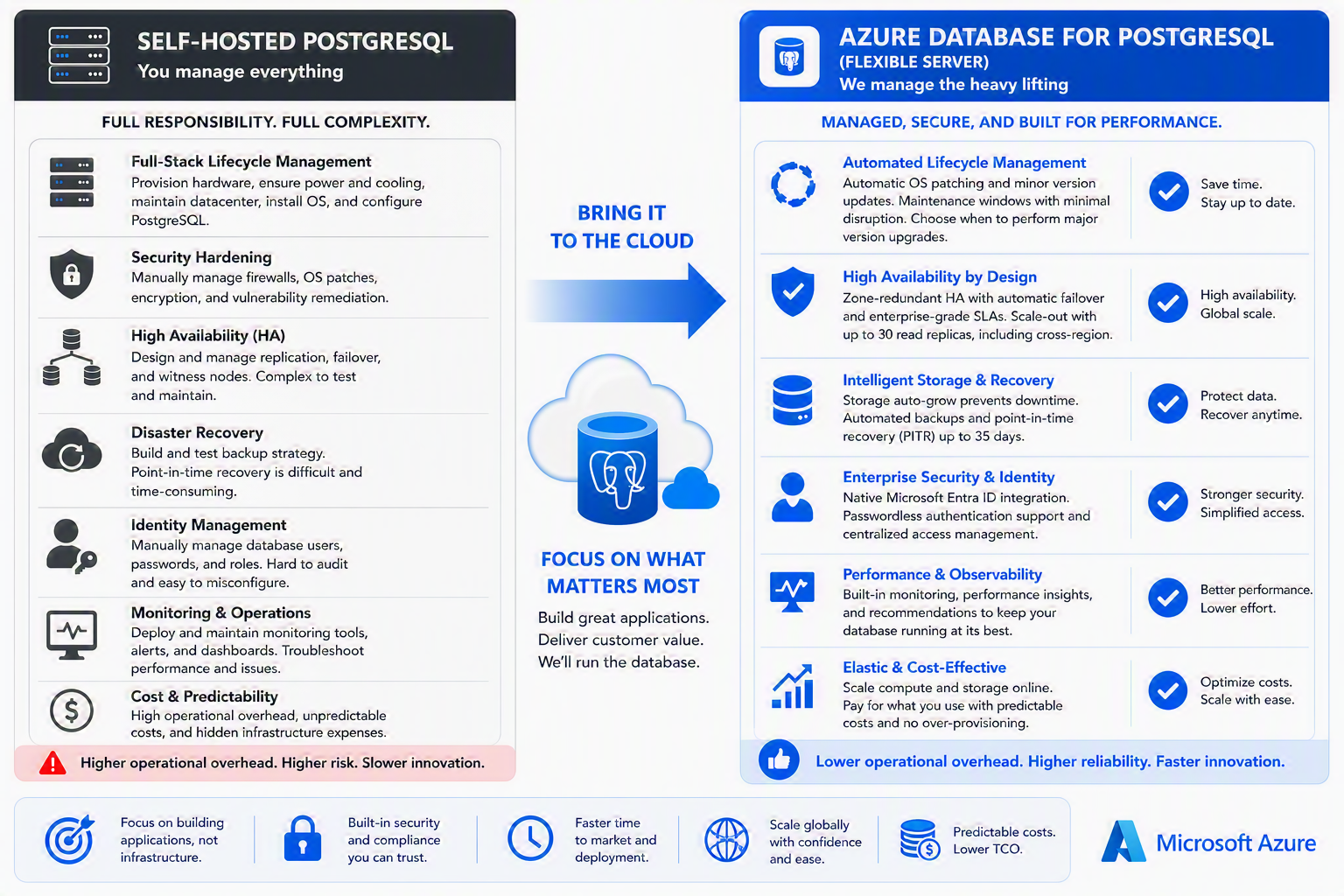
Managed PostgreSQL vs. self-hosted PostgreSQL: Key benefits and trade-offs
Lauro Ojeda
Summary This post is for technical decision makers evaluating where to run production PostgreSQL workloads. It compares two valid operating models—self-managed PostgreSQL and a managed database service—through business and operational outcomes: control, engineering capacity, resi

Official announcement
OpenClaw went viral. Meet the maintainers building and securing it.
Gregg Cochran
What began as a personal experiment quickly became a global open source project with extraordinary momentum. OpenClaw is a personal AI assistant that runs on users’ devices and connects with the messaging channels they already use. Started by Peter Steinberger as a weekend projec

Official announcement
IBM Brings AI-Powered US Open Fan Experience Back to Madison Square Park
IBM Newsroom
Join IBM for AI-powered tennis activations, live US Open match viewing, giveaways and more during Championship Weekend