
Official announcementNVIDIA Newsroom
Into the Omniverse: How Open World Models Push the Frontier of Physical AI
In July, NVIDIA joined more than 200 companies and organizations in signing “Open Weights and American AI Leadership,” an open letter arguing that AI leadership will be measured not by any single frontier model but by whether an open ecosystem reaches every sector.
August 6, 2026 by Ming-Yu Liu
0 Comments
-
X
-
-
- [
Copy link
Link copied!
](#)
Editor’s note: This post is part of Into the Omniverse, a series focused on how developers, 3D practitioners and enterprises can transform their workflows using the latest advancements in OpenUSD and NVIDIA Omniverse.
In July, NVIDIA joined more than 200 companies and organizations in signing “Open Weights and American AI Leadership,” an open letter arguing that AI leadership will be measured not by any single frontier model but by whether an open ecosystem reaches every sector.
Open models, which anyone can download, inspect, modify and run on their own infrastructure, are what make that possible. Nowhere is that more crucial than in physical AI, where every deployment is a specialization problem.
Physical AI has to understand and predict consequences, not just appearances.
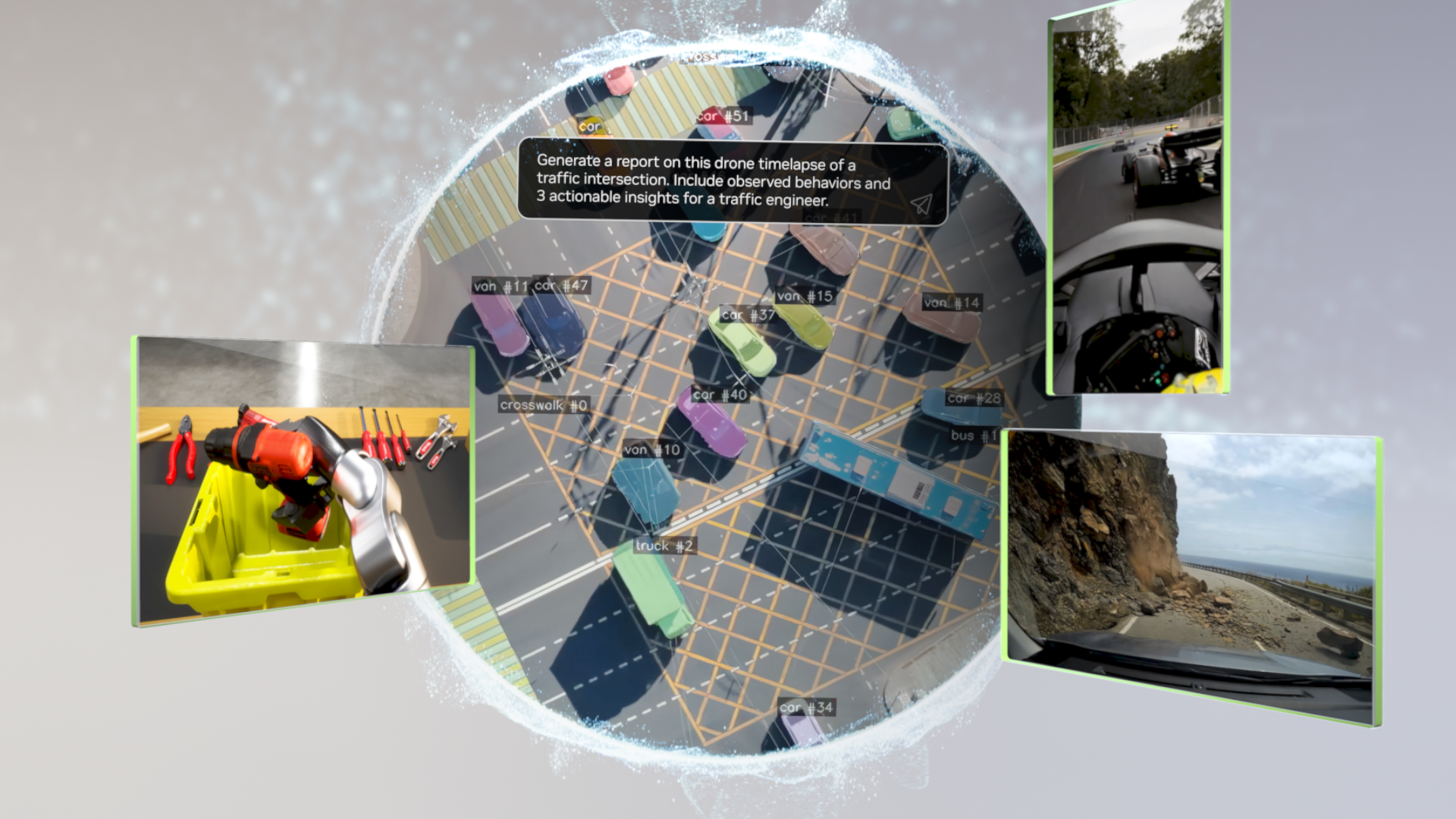
To make this possible, world models learn how physical environments behave, what may happen next and which following actions make sense. They can generate physically grounded world and action data, simulate future states and provide a foundation that teams can specialize for a robot, autonomous vehicle or vision AI system.
Open world models are already being used to generate training data, test policies and specialize physical AI systems. NVIDIA Cosmos 3 brings these capabilities together in an open model family, with leading benchmark results and adoption across robotics, autonomous vehicles and vision AI.
And NVIDIA Omniverse libraries, part of NVIDIA Agent Toolkit, provides prebuilt capabilities for building simulation-ready worlds that physical AI teams can use to train, test and validate systems before real-world deployment.
World Models Are the Foundation of Physical AI
The data behind physical AI is difficult and expensive to collect at the scale required. Rare events and long-tail scenarios can be especially difficult to reproduce safely and repeatedly.
World models enable:
- More useful data by learning physical relationships from large-scale multimodal scenarios.
- More diverse environments that vary in weather, lighting, objects and trajectories.
- A better foundation to build on and adapt to a particular robot, vehicle, sensor configuration, task or operating environment.
A general model hasn’t seen a team’s particular robot, sensors or operating environment. Closing that gap requires access to model weights, a license that permits adaptation and the tools needed for post-training.
NVIDIA Cosmos world foundation models are available under the Linux Foundation’s OpenMDW 1.1 license, enabling teams to post-train models on their own data and hardware. Specialization is where openness becomes a practical technical requirement.
Specializing a model is only part of the workflow. Teams also need environments to generate data, run simulations and test behavior.
Omniverse libraries help developers build simulation-ready environments, while OpenUSD provides the open framework for composing, reusing and exchanging complex 3D data across digital twins, simulations and synthetic data generation workflows. Together, Omniverse and OpenUSD cut the duplicated work that can otherwise pile up every time assets, sensor configurations or environmental conditions change.
Cosmos 3: The Frontier Model
NVIDIA Cosmos 3 — a frontier open physical AI foundation omni-model built on a mixture-of-transformers architecture — combines vision reasoning, world generation and action prediction, letting developers use one model family to understand scenes, generate synthetic data, simulate future states and build specialized world action models.
Developers can use Cosmos 3 as a vision language model, as a physics-grounded world simulator that predicts future world states and generates large-scale synthetic data, or as the backbone for world action models, instead of assembling and maintaining a separate model for each capability.
The family includes Cosmos 3 Super (64B) for high-fidelity world modeling, Cosmos 3 Nano (16B) for efficient reasoning and post-training, and Cosmos 3 Edge (4B) for on-device vision reasoning and robot policy deployment. Lightweight enough to run on edge GPUs, Cosmos 3 Edge can be deployed across NVIDIA RTX GPUs, NVIDIA DGX systems and NVIDIA Jetson, including Jetson Thor platforms.
Across benchmark evaluations, Cosmos 3 ranks No. 1 on Artificial Analysis for open weights text-to-image and image-to-video generation, on PAI-Bench for world generation and in the image-to-video category of Physics-IQ. For robot policy, it ranks No. 1 on RoboLab. Cosmos 3 Super is also the highest-ranked open model on VANTAGE-Bench for vision understanding.
In addition to Cosmos, NVIDIA’s physical AI stack includes Isaac GR00T for robotics, Alpamayo for autonomous vehicles and Metropolis for vision AI.
How Developers Are Putting Cosmos 3 to Work
Across industries, developers are building on NVIDIA Cosmos for physical AI applications: Doosan Robotics, LG Electronics, Samsung Electronics and Skild AI in robotics; Li Auto, Xiaomi and Afari in autonomous vehicles; and Centific, Fogsphere, Linker Vision, Milestone Systems and Yuan for vision AI agents powering industrial AI and smart spaces applications.
The NVIDIA Cosmos Coalition extends this work by bringing together world model builders, AI developers and physical AI leaders to contribute models, research and evaluation methods. NVIDIA recently expanded the coalition to Japan, where robotics and manufacturing leaders intend to join and develop open world models for factories, logistics, agriculture, construction, healthcare and transportation.
Together, these implementations and collaborations are establishing open world models as an adaptable foundation for physical AI across robots, autonomous vehicles and vision AI systems.
Get Plugged In
Learn more about world models, OpenUSD and physical AI development by exploring these resources:
- Explore the open Cosmos 3 model collection and datasets on Hugging Face and GitHub.
- Read the Cosmos 3 technical report for full architecture details and evaluations.
- Read the Cosmos 3 technical blog.
- Tune in to the Cosmos Labs livestreams.
- Learn about the NVIDIA Cosmos Coalition.
- Categories:
- AI
- Robotics
- Tags:
- Artificial Intelligence
- Cosmos
- Digital Twin
- Into the Omniverse
- Isaac
- Metropolis
- Omniverse
- Open Source
- Physical AI
- Robotics
- Simulation and Design
- Synthetic Data Generation
- Universal Scene Description
Related News
Gaming
GeForce NOW Gives Gamers More Ways to Play at Gamescom 2026
Aug 27, 2026
Gaming
Bring the Fire: Play Games on GeForce NOW With New Firefox Browser Support
Aug 20, 2026
Gaming
Class Is in Session: GeForce NOW Levels Up Linux, Chromebooks and More
Aug 13, 2026
Gaming
GeForce NOW Shakes Up August With 26 New Games
Aug 6, 2026
Related stories

Official announcement
Samsung Galaxy S26 FE: Delivering the Latest Flagship Experience, Focused on What Matters Most
Samsung Newsroom
Samsung Electronics today announced Galaxy S26 FE, the newest addition to the Galaxy S26 family and the first in the lineup to launch with One UI 9 — bringing the latest premium Galaxy experiences to more users from day one. With enhanced camera capabilities and more context-awar

Official announcement
Giga-Scale AI and the Ethernet Evolution: How Spectrum-X Ethernet Rewrites the Rules
NVIDIA Developer Blog
The massive growth of generative AI has fundamentally altered data center design. As distributed model training scales to span hundreds of thousands of GPUs,... The massive growth of generative AI has fundamentally altered data center design. As distributed model training scales

Official announcement
How AI Coding Agents Can Unlock Materials Simulation with NVIDIA ALCHEMI Toolkit
NVIDIA Developer Blog
Atomistic simulation requires three things: knowledge of the science, compute-efficient implementation of simulations, and accessible interfaces to the... Atomistic simulation requires three things: knowledge of the science, compute-efficient implementation of simulations, and ac
Official announcement
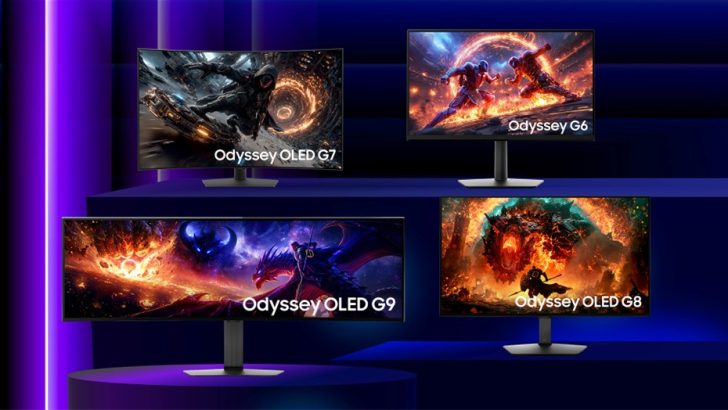
Samsung Introduces New Odyssey Lineup for Fast-Paced Gaming at Gamescom 2026
Samsung Newsroom
Samsung Electronics today announced its 2027 Odyssey gaming monitor lineup at Gamescom 2026, the world’s largest gaming event, being held in Cologne, Germany from Aug. 26-30. The new lineup introduces multiple Odyssey models that feature world-first innovations, empowering player

Official announcement
How we saved 100 terabytes of memory by optimizing 1.1.1.1’s DNS cache
Sebastiaan Neuteboom
Big Pineapple , the platform behind 1.1.1.1 , Gateway DNS , DNS Firewall , AS112 , and several other Cloudflare DNS services, stores over 250 billion DNS cache entries at any given time. At that scale, wasting a single byte per entry costs more than 250 gigabytes of memory across
Official announcement
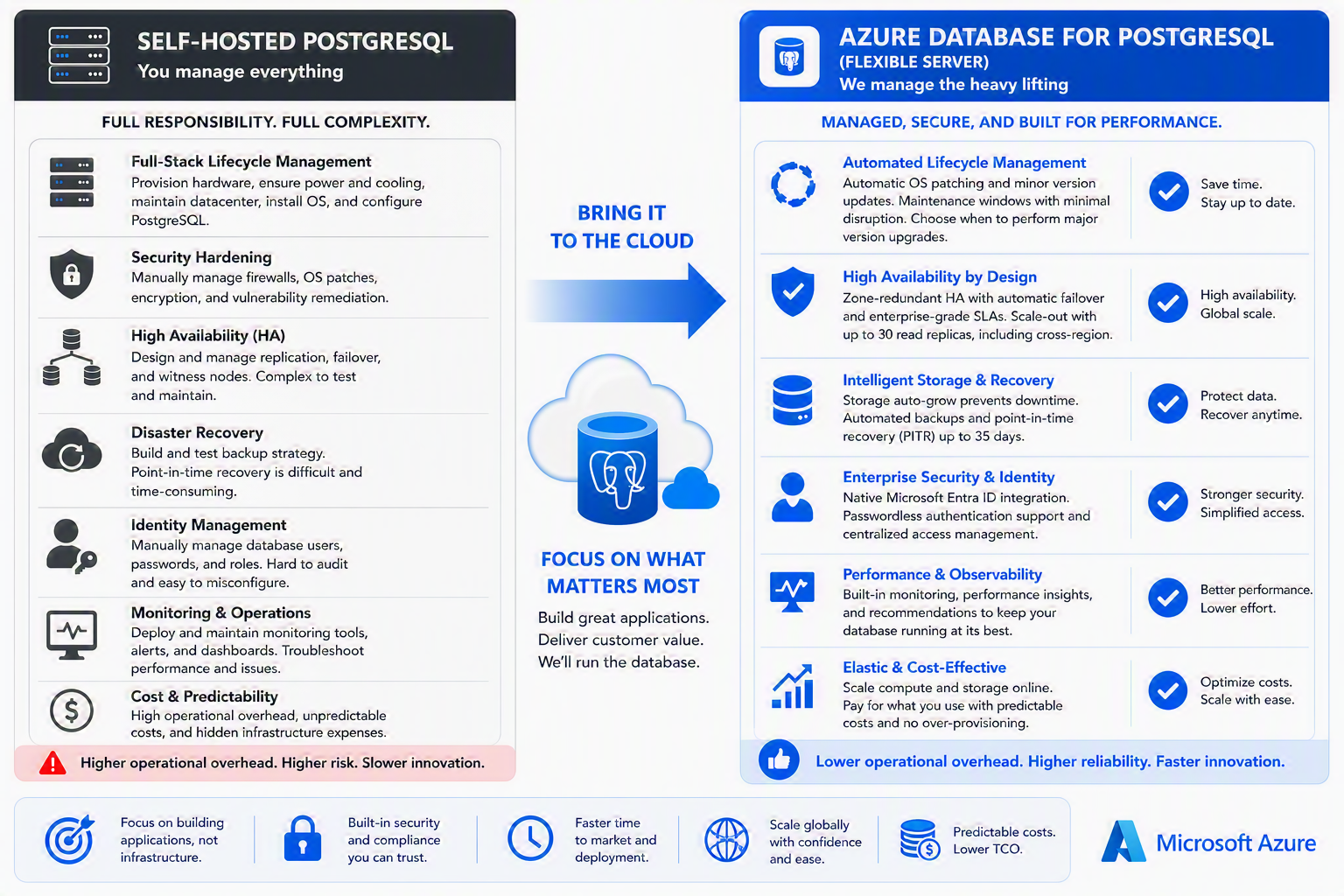
Managed PostgreSQL vs. self-hosted PostgreSQL: Key benefits and trade-offs
Lauro Ojeda
Summary This post is for technical decision makers evaluating where to run production PostgreSQL workloads. It compares two valid operating models—self-managed PostgreSQL and a managed database service—through business and operational outcomes: control, engineering capacity, resi